TheFarmersDigest
The Farmers Digest
Aug 22, 2025
Editor
Chris Pigge

Editor
Miles Falk
What is Mob Grazing
It's All Rotational Grazing
Mob grazing is rotational grazing. The only difference is stocking density, meaning how many pounds of animal you put on each acre of paddock. When people talk about mob grazing, they usually mean rotational grazing at very high stock densities, often 200,000 to 500,000 pounds per acre or more. But there is no magic number where rotational grazing suddenly becomes mob grazing. It is all the same system at different intensities.
Stocking density is only one variable. Movement frequency can matter just as much. Some producers run extremely high densities but move animals frequently—such as twice a day—keeping them on fresh forage constantly. Others use lower densities but move every few days. Both approaches can work and both can fail. The interaction between density, movement frequency, recovery time, forage quality, and weather creates endless variations that no single study has fully captured. What works for a producer with reliable rainfall on deep soils might fail for someone dealing with drought-prone clay.
The Density-Movement Relationship
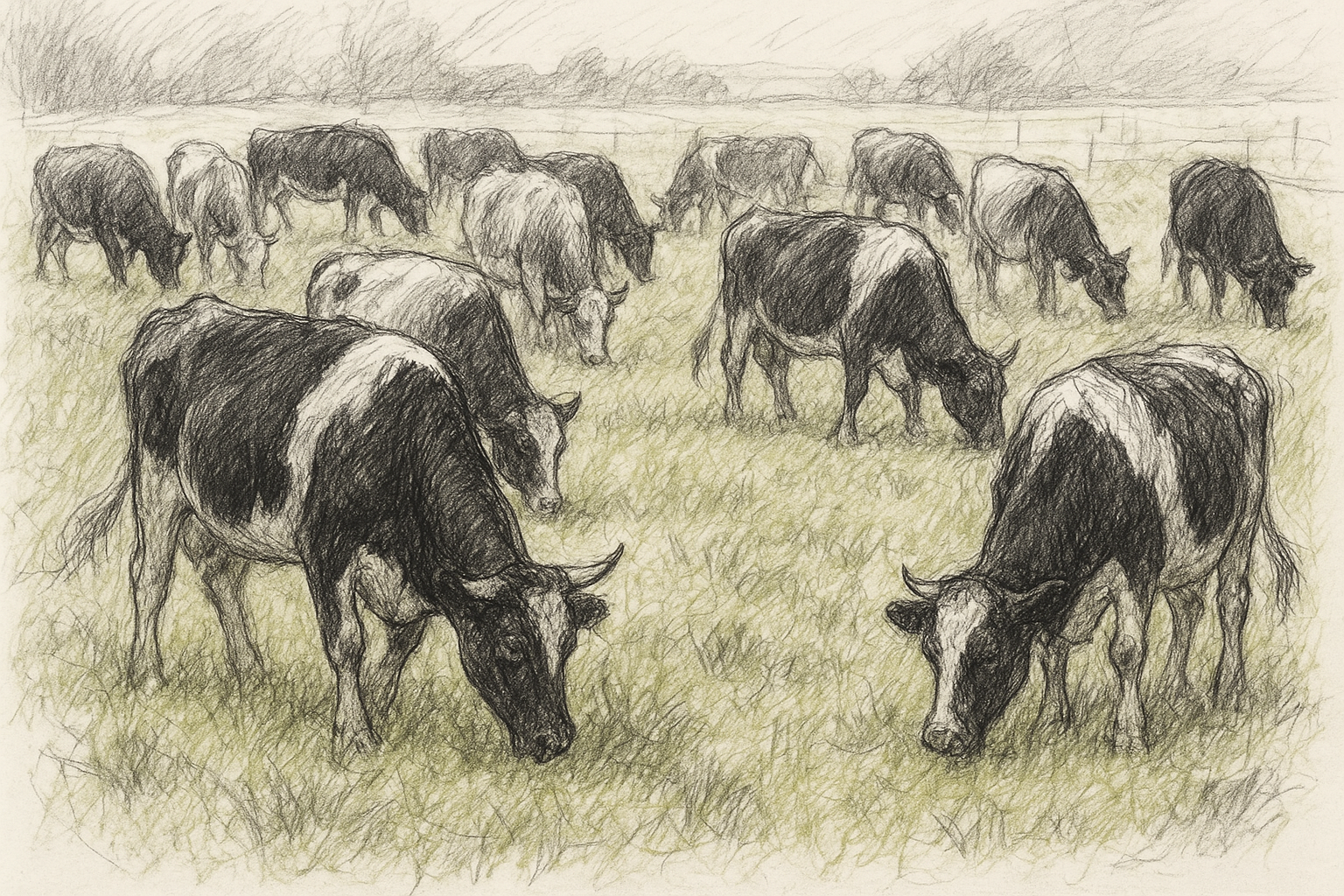
The traditional assumption is that high density grazing hurts animal performance, but the real factor is intake volume. A 1,000-pound cow needs roughly 25 to 30 pounds of dry matter daily. At high densities, animals eat everything in front of them like lawn mowers while trampling significant material. This trampled material acts as soil armor, protecting against erosion and temperature extremes while slowly decomposing to build organic matter and stimulating new growth from the soil seed bank.
At 300,000 pounds per acre, if animals stay too long, they run out of food, everything is either eaten or trampled. With frequent moves, that same high density group hits fresh ground with enough forage to maintain performance. They still eat everything, including weeds and stems they'd normally avoid, but total intake volume matters more than plant selectivity as long as overall quality meets nutritional needs. Know what's growing in your fields to avoid toxic plant issues with this "lawn mower effect."
In lower density systems like 50,000 pounds per acre, animals start selective on day one, eating preferred plants. By day three, they're either regrazing areas or eating rejected plants. The uniform grazing at high density is intentional, when you move animals before they run out of volume, you get even utilization, maintained performance, and soil benefits from hoof impact.
However, soil compaction becomes a real concern, especially with clay soils after heavy rain. Infrastructure and labor determine what's actually possible. Frequent movement requires significant time and strong portable fencing. These aren't limitations but parameters that define your realistic options.
Equally critical is the rest period after grazing. Plants need time to replenish root reserves and regrow leaf area. Without adequate recovery, even perfect grazing management fails. Some producers graze at high density with long recovery periods; others use lower density with shorter rest periods. The right balance depends on your location, weather, and management skill.
What the Research Misses
Most grazing studies test single variables while holding others constant—comparing 100,000 to 300,000 pounds per acre, both moved daily. Real farms don't work that way. Producers constantly adjust based on growth rates, weather, and animal condition. This flexibility is nearly impossible to replicate in controlled studies.
Studies capture snapshots, not seasonal patterns. A producer might use ultra-high density during peak spring growth, moderate density through summer, and lower density in fall. The yearly average tells a different story than any single snapshot. Research provides starting points but cannot capture the management art that makes the difference between success and failure. Your observation and adjustment matter more than what any study predicts.
Finding What Works for You
The most successful graziers treat their farms as ongoing experiments. Start with what you can manage consistently, then experiment at the margins. Try higher density in one paddock, move one group more often, or extend recovery time in another area. Document results with photos, weight records, and regrowth notes.
Some operations find their sweet spot at moderate densities moved every few days—animals perform well, pastures stay productive, and labor stays manageable. Others increase carrying capacity with very high densities and frequent moves. Some use variable density as a tool, ramping up to address weed problems then backing off for normal production.
Success depends on your goals. High density might not improve weight gains but could solve weed issues. Frequent moves might not pencil out for beef production depending on weight gain but could build soil health over decades. The trampling some view as waste, others see as investment in organic matter and future productivity.
The Bottom Line
There's no formula where X pounds per acre moved every Y hours equals success. Producers succeeding with high density and frequent moves prove conventional wisdom about stocking density is incomplete. Those thriving with moderate systems show high intensity isn't necessary for everyone.
Your task isn't copying someone else's system but understanding the variables—density, movement frequency, recovery time, soil impact—and testing combinations for your land and goals. Rest periods are as important as grazing events. Watch soil conditions, especially with clay soils and wet weather. The debate about trampling as waste versus soil building continues, but your careful observation reveals what's happening on your land.
The strength of rotational grazing at any density is flexibility. Adapt as you learn, responding to what your land tells you rather than following rigid plans. Some find the intensity worthwhile; others achieve their goals with less intensive approaches. Both paths are valid.
References
Gompert, Terry. "Mob Grazing 101." Hereford World, January 2011.
Kingsagriseed. "How Mob Grazing Benefits Pastures and Livestock." September 12, 2023.
MaiaGrazing. "What is Mob Grazing and what are the benefits." June 30, 2024.
MaiaGrazing. "What is Mob Grazing and what are the benefits." January 25, 2022.
University of Kentucky. "Grazing Methods: Which One Is for You?" Master Grazer.
Progressive Forage. "Choosing a grazing system: Mob vs. rotational." Ag Proud, June 15, 2022.
Beef Magazine. "Ranchers Sing The Praises Of Mob Grazing of Cattle." June 29, 2023.
On Pasture. "Is Mob Grazing as Effective as We Thought?" November 17, 2021.
The Prairie Ecologist. "A Skeptical Look at Mob Grazing." January 17, 2013.
Permies. "Is Mob Grazing as effective as people say?"
Farmers Weekly. "A guide to mob grazing livestock." July 5, 2022.
Farmbrite. "Grazing Methods - Which one is right for you?" November 20, 2024.
EESI. "The Climate and Economic Benefits of Rotational Livestock Grazing."
PubMed. "Effects of grazing on grassland soil carbon: a global review."
Science. "Grassland soil carbon sequestration: Current understanding, challenges, and solutions."