TheFarmersDigest
The Farmers Digest
Jul 10, 2025

Author
Chris Pigge

Editor
Miles Falk
Following Livestock with Laying Hens: Breaking Parasite Cycles While Producing Premium Eggs
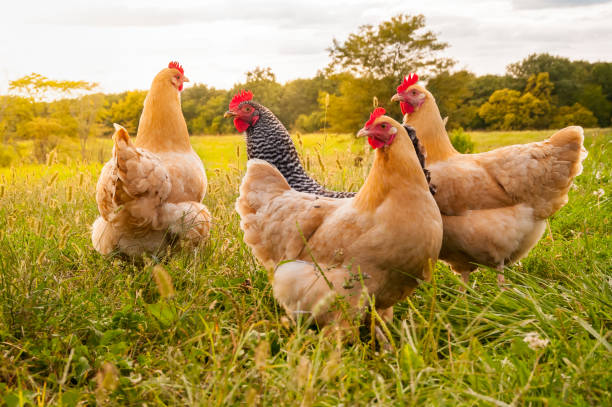
The Parasite Control That Pays for Itself
Picture cattle, sheep, or goats leaving a paddock with scattered manure piles that will become breeding grounds for horn flies and face flies within 72 hours. Most operations accept this as the cost of doing business. Smart farmers turn it into an opportunity.
Running laying hens behind livestock isn't just good farming—it's smart business. The most successful integrated operations share something in common: they've figured out how to turn pest problems into profit centers while building soil health that compounds year after year.
These aren't theoretical concepts from extension bulletins. These are practical systems that working farmers use to cut parasite pressure, reduce feed costs, and produce premium eggs—whether for the family table or premium markets.
Research from Texas A&M University shows that laying hens ranging the pasture with ruminants infested with horn flies will scratch and feed on the manure, consuming horn fly larvae and pupae while enhancing the drying of scattered manure. This natural behavior doesn't just reduce fly populations—it fundamentally breaks the reproductive cycle that keeps parasite pressure high across your operation.
The process works through simple biology. Horn flies and other parasites complete their lifecycles in fresh ruminant manure, with eggs hatching into larvae that develop into pupae before emerging as biting adults. Laying hens instinctively scratch through these manure pats, consuming the protein-rich larvae and pupae while simultaneously breaking apart and drying the remaining material. This biological control is beneficial for reducing the next generations of adult flies and the level of infestation on grazing livestock.
But the benefits extend well beyond fly control. As laying hens work through paddocks behind cattle, sheep, or goats, they're also consuming weed seeds, spreading nutrients more evenly across the landscape, and converting waste into valuable protein in the form of eggs. This integrated approach transforms what many operations view as separate enterprises into a synergistic system where each component strengthens the others.
Feed Costs and Production Reality: The Numbers That Matter
Skip the oversold promises about pastured poultry. Here's what actually works: Research shows that laying hens can glean up to 20 percent of their diet from a healthy pasture while directly depositing their manure back onto the landscape, cutting feed costs and eliminating the need to haul and spread bedding.
This 20% figure represents significant savings when properly managed, but laying hens still require substantial supplemental feeding regardless of pasture quality. Studies indicate that pastured layers get only modest percentages of their energy needs from forages, while hens can obtain 5 to 20% of their feed requirements by grazing, depending on pasture quality and management.
Extension research indicates that feed represents about 70 percent of the cost of raising laying hens, making even modest reductions meaningful to the bottom line. However, the real economic advantage often comes from premium pricing rather than reduced feed costs. Penn State University research shows that eggs from pastured hens had twice as much vitamin E and long-chain omega-3 fats, more than double the total omega-3 fatty acids compared to conventionally produced eggs.
The key insight? View pastured laying hens as a premium product system, not a way to slash production costs. The integration benefits—parasite control, soil improvement, weed management—represent additional value streams that complement sound feeding programs rather than replace them.
Egg Mobile Design: Function Over Flash
The success of any pastured laying hen operation comes down to housing that works. Research confirms what experienced producers know: mobile coops that balance mobility, protection, and labor efficiency separate profitable operations from expensive hobbies.
There are two main types of mobile housing structures: houses on wheels and houses on skids. Houses on wheels are built on a trailer that can be attached to and pulled by a tractor. The structure includes feeders, a watering system, roosts, and nest boxes. A flock is closed up at night to protect against predators and moved to a different location every few days.
For operations following livestock, successful producers rotate flocks behind cattle, sheep, or goats. Every time the ruminants move, the egg mobile follows behind them. This rotation schedule maximizes the parasite control benefits while ensuring laying hens always have access to fresh ground and the insects that emerge following grazing pressure.
Size considerations matter significantly for both animal welfare and economic viability. Successful operations typically provide 1.5 to 4 square feet per bird, with larger allocations supporting improved animal welfare and production. For example, one well-documented operation uses egg mobiles with footprints of 13-1/2' x 6' for approximately 81 square feet.
The design must account for predator protection while maintaining mobility. Modern egg mobile designs include rollaway nests that move the eggs away from the hens as soon as they are laid. The floor is a mesh that allows the manure and dirt to drop through. This keeps the house and hens cleaner. This dual-function design reduces labor while maintaining egg quality—critical factors for commercial viability.
Build smart, not heavy. Successful operations design mobile chicken houses to be towed with a utility vehicle or small tractor since daily movement is recommended. Heavy units require larger equipment and more fuel, eating into profits with every move.
Automation matters for efficiency. Many successful egg mobiles include automatic door systems that open at dawn and close at dusk, allowing hens to free-range during the day while ensuring they return to the safety of the coop at night. This eliminates the daily chore of manually opening and closing doors—particularly valuable when managing multiple livestock species.
Scale Matters: Family Production vs. Commercial Operations
The beauty of pastured laying hens lies in their scalability and flexibility. Unlike other livestock enterprises that require significant infrastructure investment before showing returns, laying hens can provide benefits at virtually any scale.
Small-Scale Family Production (25-50 hens)
A small flock of 25-50 laying hens provides substantial benefits without marketing complexity. At this scale, the eggs primarily serve family consumption with occasional surplus for neighbors or friends. The parasite control benefits remain just as valuable—these hens will work through manure pats and break fly cycles regardless of whether the eggs enter commercial markets.
Small flocks also access higher percentages of their diet from natural foraging. With fewer birds competing for insects, grubs, and weed seeds, each hen can find more natural food sources. This increased foraging efficiency often translates to better egg quality and reduced feed costs per bird.
The management simplicity of small flocks appeals to many producers. One mobile coop housing 25-50 birds requires minimal daily labor, can be moved easily with small equipment, and provides learning opportunities without overwhelming time commitments.
Commercial Scale Operations (100+ hens)
Scaling up to commercial egg production changes the entire equation. Experienced producers report that operations running several hundred laying hens require more intensive management, sophisticated marketing strategies, and greater infrastructure investment.
Commercial scale operations benefit from economies of scale in feed purchasing and equipment utilization. However, they also require developing direct-to-consumer sales channels, maintaining consistent production schedules, and meeting food safety regulations that small family flocks typically avoid.
The labor requirements increase substantially at commercial scale. While automation helps, managing multiple egg mobiles across large acreages demands systematic approaches to rotation scheduling, egg collection, and flock health monitoring.
Marketing becomes the determining factor for commercial viability. Experienced producers report that building customer relationships for premium eggs requires consistent quality, reliable supply, and ongoing education about production methods. Many operations take 2-3 years to develop sufficient market channels for profitable direct sales.
Water Systems:
Water system design often determines whether mobile laying hen operations succeed or become expensive lessons. While both stationary and mobile systems require 24/7 water access, mobile units face the additional challenge of providing consistent water while minimizing the daily labor that kills profitability.
Gravity-fed water systems offer a practical solution. One approach uses a five-gallon bucket that gravity feeds waterers along each side of the shelter. This gravity-fed approach eliminates the need for pumps or electrical connections while providing adequate flow for modest-sized flocks.
For larger operations, nipple drinkers or bell waterers mounted on mobile stands help prevent spillage and contamination. These systems require more initial investment but reduce daily labor and maintain water quality better than open systems.
Water placement affects bird distribution and pasture impact. Providing drinking water along multiple sides of the house ensures ample water stations for the hens. Multiple access points prevent crowding and ensure subordinate birds maintain adequate water access—critical for maintaining production in pastured systems where social hierarchies become more pronounced.
Efficient designs solve the refill problem without creating new ones. The best systems provide ways to refill water without entering the shelter. This design feature streamlines chore time and reduces the need for people to enter the egg mobile for routine tasks—details that matter when you're moving birds daily.
Predator Protection: Mobile Changes Everything

Mobile pastured laying hens face predator challenges that stationary systems avoid through permanent fencing. The reality? Mobile operations struggle to use standard fencing or netting efficiently because of the regular movement. Guard dogs or other protective animals provide the most practical solution.
This limitation requires different thinking about protection strategies. Many successful operations rely on livestock guardian dogs that patrol the general area rather than staying with specific flocks. Others use llamas or donkeys in multi-species grazing systems that provide natural predator deterrence.
Timing of moves affects predator pressure significantly. If you stay in one area for an extended period predators are more likely to get curious. Aerial predators pose the greatest challenge to mobile systems since permanent overhead protection isn't practical. The mobile house itself provides the primary protection—when aerial predators attack, hens instinctively run to the shelter of their house. Many operations also rely on livestock guardian dogs or other protective animals that can patrol larger areas and provide additional deterrence.
Housing design features can provide some protection. Solid floors prevent tunneling predators from accessing birds at night, while proper ventilation ensures adequate airflow without creating entry points. The challenge lies in balancing protection with mobility and cost constraints.
Integration Timing: Maximizing Parasite Control Benefits
The timing of laying hen introduction behind livestock determines the effectiveness of parasite control. Laying hens are often rotated onto pastures after cattle, sheep, or goats, where they forage on seeds, vegetation and scavenge for invertebrates in manure deposits.
The optimal timing occurs when fly larvae are developing but before they complete metamorphosis into adult flies. This typically means introducing laying hens 48-96 hours after ruminants leave a paddock, allowing time for eggs to hatch into larvae while preventing adult emergence. Once established in this timing sequence, the hens move in sync with the livestock rotation, maintaining the optimal 2-4 day lag that maximizes parasite control.
Feed Requirements and Pasture Contribution
Understanding the actual nutritional contribution of pasture helps set realistic expectations for feed cost reductions. Research shows that the growth rate of birds on pasture will be slower than that of birds fed only complete feeds, reflecting the energy expenditure required for foraging behavior.
Studies indicate that different breeds of laying hens have different foraging habits and consumption rates. Heritage breeds often show greater foraging motivation than modern production strains, though this comes with trade-offs in production efficiency.
For laying hens, layers forage much more effectively than meat birds, making them better suited for integrated grazing systems. Their longer production cycle—typically 12-18 months compared to 6-8 weeks for meat birds—allows them to fully exploit seasonal foraging opportunities and develop efficient grazing patterns.
Pasture quality significantly affects nutritional contribution. Laying hens forage best when there are plenty of legumes and forbs available in the pasture. The smaller, rounder leaves are easier for them to eat compared with longer, slender grass leaves.
Following livestock provides substantial protein sources beyond plant matter. Laying hens consume significant amounts of protein from insects, larvae, and other invertebrates found in and around manure pats. This natural protein supplementation can reduce commercial feed requirements, though complete feeds remain necessary for optimal production.
Protein requirements remain substantial regardless of pasture access. Extension research confirms that free-range laying hens need the same diet as confined layers, perhaps with a little extra protein to account for increased activity levels and varied environmental stresses.
Seasonal Management Considerations
Pastured laying hen systems must adapt to seasonal changes that affect both hen behavior and parasite lifecycles. Hens' laying cycles are tied to weather and daylight patterns, creating natural fluctuations in production that conventional operations avoid through environmental controls.
While many mobile chicken houses do have some automated lighting features, the hens are still highly affected by the outdoors. This environmental exposure affects production timing but often improves egg quality and enhances the premium pricing potential.
Winter management requires particular attention in northern climates. In pasture-based poultry systems, hens will typically need to go indoors or have some kind of heating source separate from the sun to keep them alive and healthy. In addition to this they often molt during this period and are unproductive. This is both good and bad on the one hand you get no eggs but on the other when spring comes around they will be ready to go.
Summer provides peak foraging opportunities when fly control becomes most valuable. While solar radiation has a moderate to strong negative association with chicken pasture ranging during the hottest parts of the day, laying hens remain active during morning and evening hours when temperatures moderate. This natural behavior pattern still allows effective fly larvae consumption while the birds seek shade during peak heat.
Conclusion
Successful integration of laying hens behind livestock requires systematic planning and realistic expectations. Don't try to revolutionize your entire operation overnight. Start with modest goals and scale up as experience and infrastructure develop.
Begin with 25-50 laying hens in a simple mobile shelter behind your existing livestock rotation. This scale allows for learning system management without overwhelming labor demands or major capital investment. Laying hens prefer their pasture to be around three inches tall, so coordination with cattle, sheep, or goat timing becomes essential.
The benefits of integrated laying hen-livestock systems compound over time as soil health improves and parasite pressure decreases. Pasture-raised eggs demonstrate healthier nutritional profiles than conventionally produced eggs, while the manure benefits create lasting improvements to pasture productivity. Penn State University research demonstrates that eggs from pastured hens had twice as much vitamin E and long-chain omega-3 fats compared to conventional systems.
The system creates positive feedback loops where healthier soil supports better forage, which improves livestock performance and reduces the need for external inputs. Laying hen manure is high in nitrogen and phosphorus. Pastures, after laying hens have grazed on them, are dark green and have a rich nutrient profile for other ruminants to graze.
Despite the compelling benefits, pastured laying hen integration demands acknowledging significant challenges that extension publications often gloss over. Daily management demands increase substantially compared to either pure livestock or conventional poultry operations. Weather delays, predator losses, and equipment failures impact profitability faster than you'd expect.
The learning curve proves steeper than many anticipate, particularly for producers transitioning from conventional livestock systems. Managing multiple species across rotating paddocks requires developing new skills in animal behavior, timing coordination, and infrastructure management.
However, operations that master these systems often report improved overall farm profitability, enhanced soil health, reduced parasite pressure on other livestock, and greater system resilience. The key? View integration as a long-term system development project rather than a quick fix for immediate production challenges.
Understanding parasite control as one component of a broader integrated system helps maintain realistic expectations while capturing the full range of benefits. When properly managed, laying hens following livestock represent agriculture's most elegant solution: turning pest management challenges into productive assets that strengthen the entire operation.
References
Alabama Cooperative Extension System. "Nutrition for Backyard Chicken Flocks." July 12, 2022.
American Pastured Poultry Producers Association. "Pastured Poultry Shelters and Houses."
ATTRA - Sustainable Agriculture. "Pastured Poultry: Egg Production."
ATTRA - Sustainable Agriculture. "Pastured Poultry Nutrition and Forages."
Dine-A-Chook. "The Complete Guide to Feeding Backyard Chickens." December 16, 2022.
Georgetown University. "Do Chickens Help Solve the Cattle Parasite Problem?"
Hobby Farms. "3 Forages For Pasture-Raised Chickens." February 5, 2025.
Mobile Chicken House. "Mobile Pastured Eggs: Everything You Need To Know." August 9, 2023.
On Pasture. "An Egg Mobile From a Repurposed Trailer." August 20, 2018.
Penn State University. "Research shows eggs from pastured chickens may be more nutritious."
Sustainable Farming Association. "Pastured Poultry Fact Sheet." August 22, 2024.
The Poultry Site. "Introduction to Pasture-Raised Poultry: Getting Started."