TheFarmersDigest
The Farmers Digest
Jul 21, 2025

Editor
Chris Pigge

Editor
Miles Falk
Milkweed in Livestock Operations: What It's Trying to Tell You
Weeds Series
Editors
Miles Falk
Chris Pigge
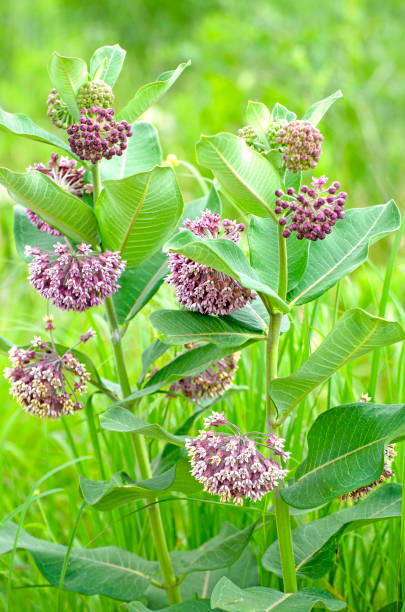
Common milkweed (Asclepias syriaca) isn't just showing up randomly in your pastures—it's broadcasting a specific message about your soil conditions and management practices. When milkweed establishes itself, it's telling you something important about what's happening beneath the surface, and understanding this message can help you address the root causes rather than just fighting the symptoms.
Milkweed reveals a complex story. It thrives in well-drained soils with adequate structure but often signals areas where beneficial competition has declined and management intensity could improve. It's particularly fond of soils that aren't too acidic or too compacted, tolerating pH levels from 4-10 but performing best around 6.5-7.5. Milkweed also appears where soil compaction isn't severe but beneficial forage density has decreased, creating openings for this aggressive perennial to establish.
What makes milkweed particularly telling is its preference for stable, undisturbed areas with declining competition. You'll often find it along fence lines, headlands, and field edges where equipment doesn't travel regularly but where beneficial grasses and legumes have thinned out. Milkweed doesn't necessarily indicate poor soil—it often shows up on decent ground where management simply isn't intensive enough to maintain competitive forage stands.
The plant's extensive root system, which can penetrate 7-12 feet deep, allows it to access nutrients and moisture from well below the surface. In this way, milkweed can be viewed as a biological miner, bringing nutrients up from subsoil layers. Milkweed doesn't require severely damaged soil to establish—it's more opportunistic, taking advantage of any reduction in competition from beneficial species.
This is exactly why typical weed control approaches often fail with milkweed. Mowing, spraying individual plants, or spot treatments may provide temporary suppression, but the underlying conditions that favor milkweed over desirable forages remain unchanged. That's where strategic grazing management becomes crucial.
Is Milkweed Even a Problem?
Here's where milkweed management gets complicated: monarch butterflies depend entirely on milkweed for reproduction, making complete elimination potentially problematic for wildlife conservation. But the benefits extend beyond butterflies.
Milkweed's deep taproot system mines potassium, phosphorus, and trace minerals from subsoil layers, concentrating them in leaves that eventually decompose and enrich surface soil. The plant often establishes in moderate-quality soils where it can actually improve mineral cycling without indicating major problems.
Research shows milkweed can form beneficial relationships with nearby grasses and legumes, with its deep roots accessing water and nutrients that shallow-rooted species can't reach. The plant's decomposing matter adds organic compounds that improve soil structure and water retention for neighboring plants.
A weed is only problematic if it conflicts with your management goals. In fence rows, field edges, or designated conservation areas, milkweed provides wildlife habitat while performing valuable soil functions. The key lies in strategic tolerance—managing milkweed where it interferes with production while maintaining it where it serves beneficial purposes.
High-Density Grazing for Trampling Pressure
Since milkweed is toxic to livestock, the goal isn't getting animals to eat it—it's using trampling pressure and competitive forage management to suppress milkweed over time. High-density, short-duration grazing can help manage milkweed through hoof impact rather than consumption.
Important toxicity consideration: Milkweed is poisonous to all livestock, with doses as low as 1% of an animal's body weight potentially lethal. Animals typically avoid milkweed when good forage is available, but overgrazed or overstocked pastures increase the risk of livestock consuming toxic plants when they're hungry.
The key lies in trampling and competition management. When you concentrate livestock in smaller areas for short periods, their hooves can damage milkweed stems and crowns, especially when the plants are actively growing in mid to late summer. This trampling pressure, combined with the biological disturbance from concentrated manure and urine, can stress milkweed plants while stimulating competitive forage regrowth.
However, the real power of rotational grazing for milkweed management comes from its effects on the competitive forage community. Dense, vigorous grass and legume stands represent milkweed's greatest natural enemy. Rotational systems that allow adequate rest periods between grazing events enable beneficial species to recover fully, maintain deep root systems, and compete aggressively with establishing milkweed seedlings.
If you're interested in learning more about rotational grazing we have a few articles about implementation.
Management Strategies Beyond Grazing
Timing becomes critical for any milkweed management approach. The plant's carbohydrate reserves reach minimum levels during July through September, making this the optimal window for control measures. During this period, milkweed is actively transporting energy downward to storage roots.
The mow-then-spray approach can be particularly effective when properly timed. Mowing during the growing season forces milkweed to use stored root energy for regrowth while preventing seed production. Allow 4-6 weeks for plants to regrow about 12-15 inches, then apply systemic herbicides when plants are actively growing and transporting nutrients downward. This strategy works because the herbicide travels to roots more effectively when plants are rebuilding energy reserves.
Strategic mowing alone is largely ineffective since milkweed readily regrows from deep roots. However, if you can consistently mow the problem areas over time you could deplete the roots, this is often not feasible from a labor standpoint though. In addition to this cultivation often does not work because the root system is so deep.
Herbicide applications using 2,4-D plus dicamba, triclopyr, or glyphosate during late bud to early bloom can provide control, though multiple treatments over multiple seasons are often necessary for established stands.
The key is understanding that no single approach solves milkweed problems. Sustainable management combines multiple strategies while addressing the underlying competitive imbalance that allowed milkweed to establish.
Reading the Message
Milkweed reveals information about pasture management and competitive balance. Rather than indicating severely degraded conditions, milkweed often shows up where management simply isn't intensive enough to maintain peak forage density.
The key insight: milkweed frequently appears in decent soils with moderate fertility where increased grazing management or strategic fertility inputs could tip competitive advantage back toward desirable species. This creates opportunities for improvement rather than requiring major soil rehabilitation.
Milkweed isn't necessarily something to eliminate. It's something to evaluate and manage strategically. It's indicating that competitive pressure has declined and telling you where management intensity could be adjusted. Address competition through rotational grazing and targeted improvements, and milkweed often finds its appropriate ecological niche without dominating productive areas.
References
Cornell University Weed Science – Comprehensive milkweed biology and management information.
Penn State Extension – "Perennial Weed Control in Grass Forages"
SARE – "Common Milkweed" weed management guide
University of Maine Cooperative Extension – "Weed Control Options for Pasture"
GROW IWM – "Milkweed (Common) - Getting Rid Of Weeds"
Old Farmer's Almanac – "What Weeds Tell You About the Soil: Natural Soil Test"