TheFarmersDigest
The Farmers Digest
Jul 9, 2025

Author
Chris Pigge

Author
Miles Falk
Building the Ultimate Market Garden
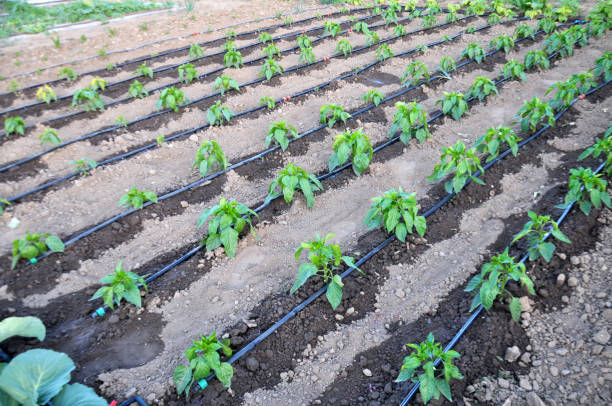
Running a profitable market garden takes more than growing good vegetables. The most successful operations share something in common—they've built systems that multiply their efforts rather than just working harder each season. Whether you're managing a quarter acre intensively or scaling up to five acres, the right infrastructure and management practices can transform your daily workload and your bottom line.
These aren't theoretical concepts from a textbook. These are practical systems that working market gardeners use to produce more food with less stress while maintaining the soil health that keeps them in business long-term.
Site Preparation: Foundation for the Season
Tarping for Effective Bed Preparation
One of the most valuable tools in a market gardener's arsenal costs less than $300 and requires no fuel. Tarping, also called occultation, has quietly revolutionized how many small-scale growers prepare their beds.
The process is straightforward. Heavy tarps—silage tarps are popular at 50' x 100' for around $200—get laid over areas designated for future planting. After 6-12 weeks, you remove the tarp to find weed-free, moist soil ready for direct seeding or transplanting. No tillage, no herbicides, just time doing the work for you.
What's happening under that tarp makes this method so effective. Without light, existing vegetation can't photosynthesize and exhausts its energy reserves. The consistent moisture and darkness create ideal conditions for decomposition. Earthworms and soil microbes break down the dead plant material, essentially composting it in place. Even persistent perennial weeds like quackgrass and bindweed succumb to extended tarping.
Timing becomes crucial for fitting this into your production schedule. For early spring beds, tarps should go down in late summer or early fall. Many growers leave them in place all winter—snow cover doesn't interfere with the process. The extended timeframe ensures complete vegetation kill while allowing maximum biological activity to improve soil structure.
Making Smart Tillage Decisions
The no-till movement has valid points about soil health, but market gardeners need to be practical. If you're converting a hay field into vegetable production or incorporating several inches of compost into new beds, tillage might be your most efficient option. The key is understanding when tillage serves a purpose versus when it's just habit.
Initial bed establishment often justifies tillage. Creating permanent raised beds, incorporating amendments deeply, or dealing with severe compaction all represent legitimate uses. But once those beds are established, many successful growers never go deeper than 2-3 inches again. They might use a power harrow for shallow cultivation or a broad fork for addressing compaction, but the days of annual deep plowing are behind them.
The middle ground approach works well: till when establishing new ground, then transition to reduced tillage methods. Your soil biology recovers, organic matter builds up, and you'll likely see improved water infiltration and drought resilience within a few seasons. Plus, you'll burn less diesel and spend less time on the tractor.
Water Management That Makes Economic Sense

Overhead Systems: More Than Just Irrigation
The T-post sprinkler system has become a favorite among practical market gardeners for good reason. A 7-foot T-post with an impact sprinkler strapped to the top provides elevated irrigation coverage for about $30 per setup. It's not fancy, but it works.
Height provides the key advantage. Elevated sprinklers throw water over tall crops without adjustment, provide uniform coverage for germination, and create valuable cooling effects during heat waves. When temperatures hit 95°F and your lettuce starts showing heat stress, overhead irrigation can drop temperatures by 10-15°F through evaporative cooling. That's the difference between marketable crops and bitter, bolted greens.
For market gardeners, this cooling effect alone justifies overhead systems for heat-sensitive crops. Many growers set up zones specifically for germinating direct-seeded crops like carrots and beets, where consistent surface moisture is critical. Others use them strategically during heat waves to prevent bolting in succession plantings of greens.
Installation remains simple—T-posts every 40-50 feet, quality impact or wobbler sprinklers, and enough hose or pipe to connect to your water source. Some operations use these as their primary irrigation for getting started, then transition to drip as they expand.
Drip Irrigation: The Backbone of Efficient Production
Every experienced market gardener will tell you the same thing about drip irrigation—they wish they'd invested in it sooner. Yes, the setup costs $500-1,500 per acre. But the benefits compound quickly.
A functional drip system starts with proper components. You need a filter to prevent clogging, a pressure regulator (usually 10-15 PSI for drip tape), and quality mainline tubing. From there, sub-main lines branch out to your beds, where drip tape delivers water directly to crop root zones. Most growers use 8-inch emitter spacing as a good all-around choice, though sandy soils might need 4-inch spacing while heavy clays can work with 12-inch.
The real payoff comes in daily operations. No more moving sprinklers during morning harvest. Foliage stays dry, reducing disease pressure dramatically. Weeds between rows don't receive water, cutting cultivation needs. You can inject liquid fertilizers directly through the system. And water use typically drops by 30-50% compared to overhead irrigation.
Professional installation tips make the system last longer and work better. Bury mainlines below cultivation depth. Install flush valves at low points for spring startup and fall winterization. Use header lines at bed ends for easy drip tape connection and replacement. Keep repair supplies handy—punch-in plugs, connectors, and spare tape—because damage happens.
Many growers find that combining drip installation with plastic mulch laying saves significant time. One pass with a mulch layer can form beds, lay drip tape, and apply plastic mulch. That's three operations in one, which matters when you're racing to get crops in the ground.
Weed Management Without the Burnout
Strategic Straw Mulching
While plastic mulch dominates commercial vegetable production, straw still has its place in smart market garden systems. A 4-inch layer of clean straw in pathways provides 90% weed suppression while creating all-weather working surfaces that your harvest crew will appreciate.
The economics work when you buy smart. Direct from the farm during grain harvest, small square bales often cost $3-5 when you provide transportation. Each bale covers roughly 100 square feet at proper depth. Compare that to paying someone to cultivate those same pathways weekly, and the math becomes clear.
Straw mulch particularly shines in permanent pathways, around long-season crops where cultivation becomes difficult, and in pick-your-own operations where appearance matters. Just make sure you're buying straw, not hay—unless you want to seed your pathways with whatever was growing in that hayfield.
Plastic Mulch: A Game-Changing Investment
Plastic mulch transforms market garden economics. Black plastic can advance harvest dates by 2-3 weeks through soil warming—critical for capturing early-season premium prices. Weed suppression reaches 90% or better. Produce stays clean, reducing wash-station time. Water conservation improves, especially when combined with drip irrigation underneath.
Different plastics serve different purposes. Black plastic remains the standard for heat-loving crops. Red plastic has shown yield increases in tomatoes. Silver reflective mulch helps with aphid control in cucurbits. White-on-black works well for summer lettuce production. Biodegradable options now exist for organic systems, though they cost more and don't last as long.
A mechanical mulch layer becomes essential at any real scale. Walk-behind units work for operations under an acre. Tractor-mounted implements that form beds, lay drip, and apply plastic in one pass make sense for larger operations. The $2,000-5,000 investment pays back quickly through labor savings and yield increases.
The numbers support plastic mulch adoption. Materials cost $150-200 per acre. Yield increases of 20-50% are common. Early harvest premiums can double crop value. Reduced cultivation and hand weeding save 10-20 hours per week. Most growers see full payback within one season.
Maintaining Soil Health in Intensive Systems
Practical Crop Rotation
Market gardens face unique rotation challenges—growing dozens of crops on limited acreage while trying to follow textbook rotation schemes. Here's what actually works: group crops by family and nutrient needs, then rotate the groups through your bed blocks.
A simplified but effective approach: Heavy feeders (tomato family, brassicas) → Light feeders (root vegetables, leafy greens) → Nitrogen fixers (legumes) → Soil builders (squash family with understory clover). This isn't perfect, but it's manageable and significantly better than no rotation at all.
Record keeping doesn't need to be complicated. A simple map or spreadsheet tracking what grew where each season prevents accidental back-to-back plantings of the same family. Many growers find that even this basic rotation dramatically reduces disease pressure and improves yields compared to continuous cropping.
Cover Crops That Fit Your Schedule
The challenge with cover crops in market gardens isn't understanding their benefits—it's fitting them into an intensive production schedule. Success comes from choosing species that match your windows of opportunity.
Buckwheat works perfectly between spring lettuce and fall brassicas—35 days from seeding to flowering, excellent weed suppression, and easy to terminate. Oats planted after final harvest winter-kill reliably in cold climates, adding organic matter without spring termination hassles. Field peas or crimson clover underseeded into fall brassicas provide nitrogen while your cash crop still produces.
Budget $75-150 per acre for cover crop seed. It's an expense, but consider it insurance for long-term soil health. The improved water infiltration, reduced compaction, and added organic matter pay dividends in future seasons.
Systems Integration
The most profitable market gardens layer these systems effectively. Beds prepped with tarping get planted through plastic mulch with drip irrigation underneath. Permanent pathways receive one good straw mulching and stay manageable all season. Overhead irrigation handles germination and emergency cooling while drip manages the rest.
Don't try to implement everything at once. Start with your biggest constraint. If you're hand-watering for hours daily, invest in irrigation first. If weeding consumes your crew's time, prioritize mulch systems. Build incrementally, using profits from improved efficiency to fund the next upgrade.
Final Thoughts
Market gardening profitably requires more than just growing skills—it demands smart systems that leverage your time and resources effectively. The infrastructure investments discussed here might seem substantial, but they're minor compared to the ongoing costs of inefficient operations.
That drip irrigation system pays for itself through water savings and labor reduction. Plastic mulch costs recover through premium early sales and reduced cultivation. Cover crops build the soil health that sustains your business long-term.
Focus on building systems that work for your specific situation, scale thoughtfully, and remember that the goal isn't just growing vegetables—it's growing them efficiently enough to build a sustainable business.
References
Colorado State University Extension. "Drip Irrigation for Home Gardens."
Gardenia.net. "Nitrogen-Fixing Plants to Enrich your Soil."
Grit Magazine. "Improve Soil With Cover Crops for Gardens."
Michigan State University Extension. "Target tillage to protect the soil."
Modern Farmer. "The Vegetable Gardener's Guide to Crop Rotation."
North Carolina Cooperative Extension. "Improve Your Garden Soil With Cover Crops."
Old Farmer's Almanac. "Planting Cover Crops in Home Gardens: Regional Guide."
Penn State Extension. "Growing Cover Crops for Nitrogen on Vegetable Farms."
Rodale Institute. "Crop Rotations."
SARE. "Crop Rotation Effects on Soil Fertility and Plant Nutrition."
University of Minnesota Extension. "Cover crops and green manures in home gardens."
University of Minnesota Extension. "Cover crops improve soil health, even on a small scale."
University of Minnesota Extension. "Reducing tillage in your garden."
University of Minnesota Extension. "Reducing tillage intensity in vegetable crops."
USDA. "Cover Crops and Crop Rotation."
Wisconsin Horticulture Extension. "Using Crop Rotation in Home Vegetable Garden."